Showing posts with label Buddhism. Show all posts

Sunday, October 2, 2022

Feel-Good Book 11: No Mud, No Lotus

There are some wonderful titles for books on Buddhism, such as Being Nobody, Going Nowhere by Ayya Khema; Wherever You Go, There You Are by Jon Kabat-Zinn, Chop Wood, Carry Water by Rick Fields, and this one: No Mud, No Lotus, by Thich Nhat Hanh. Like the other titles, this one can teach us. "Most people are afraid of suffering," the bestselling author writes in No Mud, No Lotus; The Art of Transforming Suffering. "But suffering is a kind of mud to help the lotus flower of happiness grow. There can be no lotus flower without the mud."
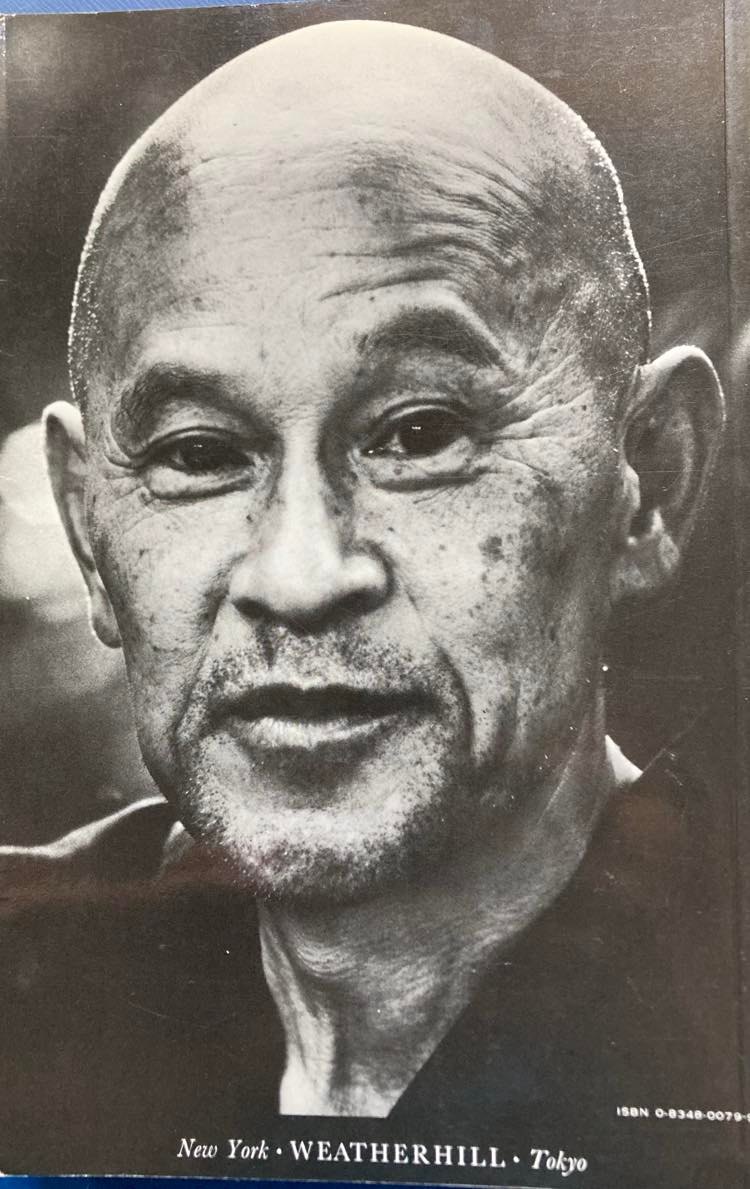
I borrowed this handbook from the local library, but I've read other books by the venerable Vietnamese monk, and have heard recordings he has made in his calm, soothing voice. He introduced the world to mindfulness, the state of awareness that brings peace, joy, and clarity to the present moment.
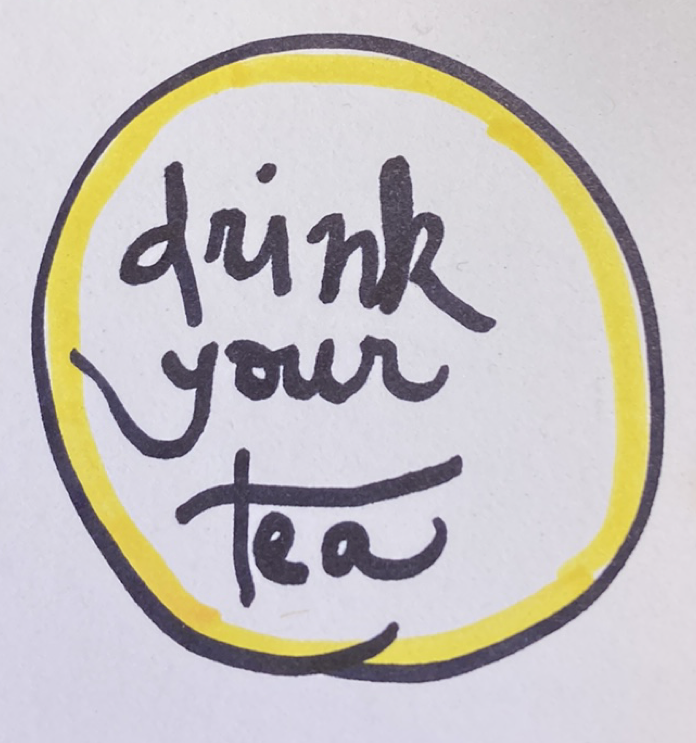
Researching for this blog I learned he also used calligraphy as a form of meditation, and his simple print and thoughtful quotes have me obsessed. I've already ordered a book full of his art and have copied some of his quotes. 

"This moment is full of wonders."

"A cloud never dies."

"We are already what we want to become."

"Do not run anymore you look silly." Haha! 

I've tried to recreate his calligraphy, but I don't have high hopes. My second-grade teacher predicted I'd never have nice handwriting, being left-handed and all, but that's not what counts here. 

Back to No Mud, No Lotus. One of over 100 books by Thich Nhat Hanh, this book is an easy, comforting read. He makes mindfulness seem so simple. "The way we start producing the medicine of mindfulness is by stopping and taking a conscious breath, giving our complete attention to our in-breath and our out-breath. When we stop and take a breath in this way, we unite body and mind and come back home to ourselves."

He uses a light approach to suffering that acknowledges pain and eases it."Breathing in, I know suffering is there. Breathing out, I say hello to my suffering." And for a dose of hope, "If you want to experience what the end of suffering will feel like, it is in the here and the now with this breath. If you want nirvana, it's right here. Breathing in, I know I am breathing in. Breathing out, I smile."

Thich Nhat Hanh shares a life-transforming Buddhist teaching that uses arrows as its metaphor. If you are hit by an arrow, you will feel pain. But if a second arrow hits in the same place, that pain will more than double the first. Consider the first arrow as something negative that happens to you -- failing a test, losing something valuable, getting sick, or being rejected. Then... "The second arrow, fired by our own selves, is our reaction, our story-line, and our anxiety. All these things magnify the suffering."
I catch myself time and again reliving something painful; in essence, firing a second arrow where the first one hit. Now I know to STOP, acknowledge the suffering, come back to the present moment and breathe. Oftentimes, we block our happiness by our desires. "We believe these things are necessary for our survival, our security, and our happiness. But many of these things - or more precisely our beliefs about their utter necessity - are really obstacles for our joy and happiness."

"If you come to look deeply into your fearful attachment, you will realize that it is in fact the very obstacle to your joy and happiness. Letting go takes a lot of courage sometimes. But once you let go, happiness comes very quickly."

"Just as we may have many small sorrows that mindfulness can help us release, we also have a multitude of small moments of happiness that we can savor and extend." Create happiness by enjoying the moment. "This is the art of happiness, tasting and delighting in the little happinesses of daily life." The monk suggests taking a piece of a paper and writing down all the conditions for happiness available to us right now. "One page may not be enough," he adds.

Thich Nhat Hanh passed away earlier this year at the age of 95, but he has left behind a large treasure of teachings, hope, and good humor. I've taken to wearing a bracelet that, every time I become aware of it on my wrist, I breathe and smile. It's just a simple way to become more mindful. If you'd like to go a step further and purchase Thich Nhat Hanh's calligraphy, "One Buddha is not enough" is on sale on Etsy for $24,500.

Saturday, August 27, 2022

Feel-Good Book 9: Holy Cow!

I found this gem on audio at my local library and loved it so much I bought the book version to read again, and to dog-ear some pages. Holy Cow, published in 2002, is the story of Australian reported Sarah Macdonald who follows her fiance Jonathan Harley, also a writer, to India for six months. It becomes a two-and-a-half-year quest for inner peace.

When she begins with having her palm read, I knew I'd love the book. (In Courage Without Grace, my main character is a palm reader.) Although Holy Cow is beautifully written, full of humor and wit and thoughtful observations, it is not for the squeamish. Macdonald describes with unflinching detail the crowds (one billion and counting in an area about one third the size of the States), the pollution, the begging, and what seems to be ever-present death. This ugliness seems to be India's strength. When Macdonald sees how happy its people are, a man explains that Indians see those who have a harder life than they do and are grateful, thanking God for what they have. But we Westerners look at the people above us and think, why don't I have what they have? This constant comparison creates our unhappiness. Hmmm...

"India is beyond statement, for anything you say, the opposite is also true," Macdonald says. "It's rich and poor, spiritual and material, cruel and kind, angry but peaceful, ugly and beautiful, and smart but stupid. It's all the extremes."

When Macdonald goes on a silent meditation retreat for ten days, she describes it in her usual candid way, as a "brain enema." This is Vipassana, an ancient Buddhist training technique, and one of its theories states that, "Unconscious thoughts create physical sensations, so letting sensations arise and pass without reacting gets rid of unconscious pollutants within our mind." For the first few days, she is overwhelmed by the silence, the aches and pains, and her restless mind, but by the end she says, "I skip out the gates, down the hill and back into India on air. My mind is clear, my heart is open, everyone is beautiful, everyone is worth loving, the world is wonderful and I feel universal love and compassion for all. For the first time in my life I'm living in the moment and I no longer miss my job, perhaps because my need for outward success to feed the ego has diminished."

Alas, she doesn't maintain the euphoria, and her quest continues as she learns about Islam, Hinduism, Sufism, American Sikhs, Hare Krishnas, Jainism, Judaism, Indian Christianity, and Parsi Zoroastrians, who "leave out their dead for vultures believing it's the cleanest, most hygienic way of getting rid of the soul's temporary home."

"I've made a start in India along my path to personal transformation and inner peace. "The Sikhs have shown me how to be strong, the Vipassana course taught me how to calm my mind, India's Muslims have shown me the meaning of surrender and sacrifice, and the Hindus have illustrated an infinite number of ways to the divine."

And yet, after all her seeking, she adds, "A phrase from the Dalai Lama's teachings comes back to me; 'Some will be drawn to Buddhism but I really think it's best that you try and find truth in the religion of your forebears and ancestors. It is very hard to change religion. I think it's safer not to.'"

Some may say I've left out the best aspect of this book: the people Macdonald meets as she travels all over India in this rollicking adventure. Oh, and the part where her now-husband Jonathan is in Afghanistan--and it's September 11, 2001. There's something in this book for everyone, and what speaks to me is her spiritual journey.

"I've learned much from the land of many gods and many ways to worship. From Buddhism the power to begin to manage my mind, from Jainism the desire to make peace in all aspects of life, while Islam has taught me to desire goodness and to let go of that which cannot be controlled. I thank Judaism for teaching me the power of transcendence in rituals and the Sufis for affirming my ability to find answers within and reconnecting me to the power of music. Here's to the Parsis for teaching me that nature must be touched lightly, and the Sikhs for the importance of spiritual strength. I thank the gurus for trying to pierce my ego armor and my girlfriends for making me laugh. And most of all, I thank Hinduism for showing me that there are millions of paths to the divine."

Sunday, June 5, 2022

What I'm Reading: Feel-Good Book Two

When I picked up Zen Mind, Beginner's Mind: Informal Talks on Zen Meditation and Practice from Open Books in Pensacola, I had no idea of the book's prominence. The publication came from talks given by Zen Master Shunryu Suzuki, compiled by Marian Derby and Trudy Dixon, and published in 1970. Only now, after some research, have I discovered it is one of the top 100 best spiritual books of the 20th century. My copy, beautifully printed in Hong Kong with a deep red frontispiece and unbelievably soft pages, is from 1994 and in its 32nd printing. To learn more about this classic, go to Zen Mind or check out the Wikipedia entry HERE

Some of the weighty chapters I read without completely comprehending, but I hope you feel the peace I felt as I sat at the feet of a kind and helpful teacher and let his gentle words play at the fringes of my mind.

On Waves: "When you try to stop your thinking, it means you are bothered by it. Do not be bothered by anything. It appears as if something comes from outside your mind, but actually it is only the waves of your mind, and if you are not bothered by the waves, gradually they will become calmer and calmer. ... You yourself make the waves in your mind."

On Character: "Just continue in your calm, ordinary practice and your character will be built up. If your mind is always busy, there will be no time to build, and you will not be successful, particularly if you work too hard on it."

On Enlightenment: "Dogen-zenji said, 'Do not think you will necessarily be aware of your own enlightenment.'" 

On Wisdom: "Wisdom is not something to learn. Wisdom is something which will come out of your mindfulness. So the point is to be ready for observing things, and to be ready for thinking. This is called emptiness of your mind. Emptiness is nothing but the practice of zazen."

On Practicing Meditation: "Zazen practice is the practice in which we resume our pure way of life, beyond any gaining idea, and beyond fame and profit. By practice we just keep our original nature as it is. There is no need to intellectualize about what our pure original nature is, because it is beyond our intellectual understanding. And there is no need to a appreciate it, because it is beyond our appreciation. So just to sit, without any idea of gain, and with the purest intention, to remain as quiet as our original nature--this is our practice."

On Peace: "The best way towards perfect composure is to forget everything. Then your mind is calm, and it is wide and clear enough to see and feel things as they are without any effort. The best way to find perfect composure is not to retain any idea of things, whatever they may be -- to forget all about them and not to leave any trace or shadow of thinking."

The wrap-up is another quote: "There is no need to remember what I say; there is no need to understand what I say. You understand; you have full understanding within yourself. There is no problem." Reading this book is like taking a long, deep breath. Yes, it's okay. We are here, alive in this moment, and it's okay. This reminds me of one of the most beautiful songs I've ever heard, It's OK by Nightbirde.